
WPC Cladding vs Timber Cladding
Which is better for Melbourne homes? We run the honest comparison — maintenance, 10-year cost, UV resistance, termites, lifespan and more. No spin. Just the real numbers.
WPC Co-Extrusion Cladding Panels
220x28mm matte finish · 8 colours · 4 lengths · warehouse-direct Melbourne
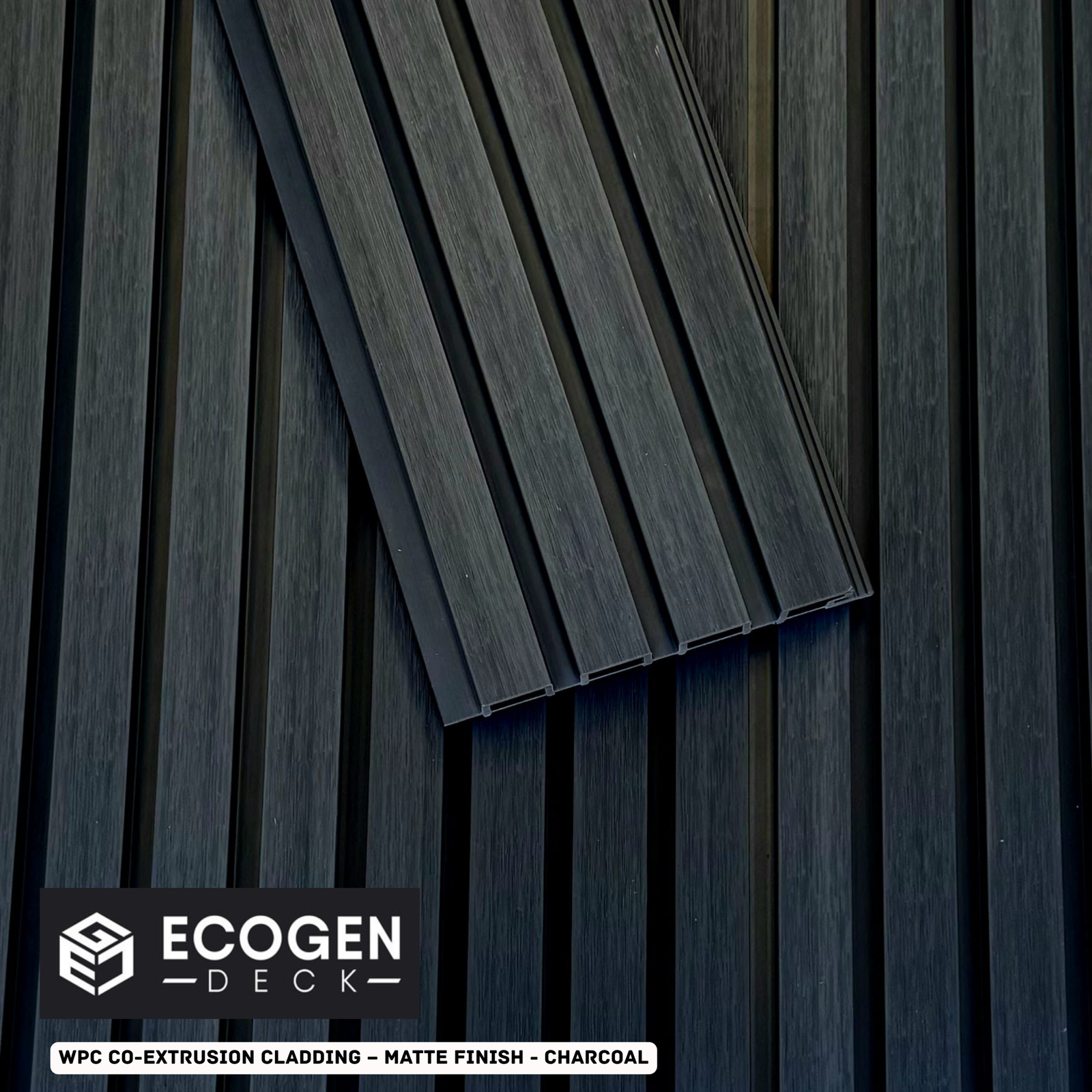
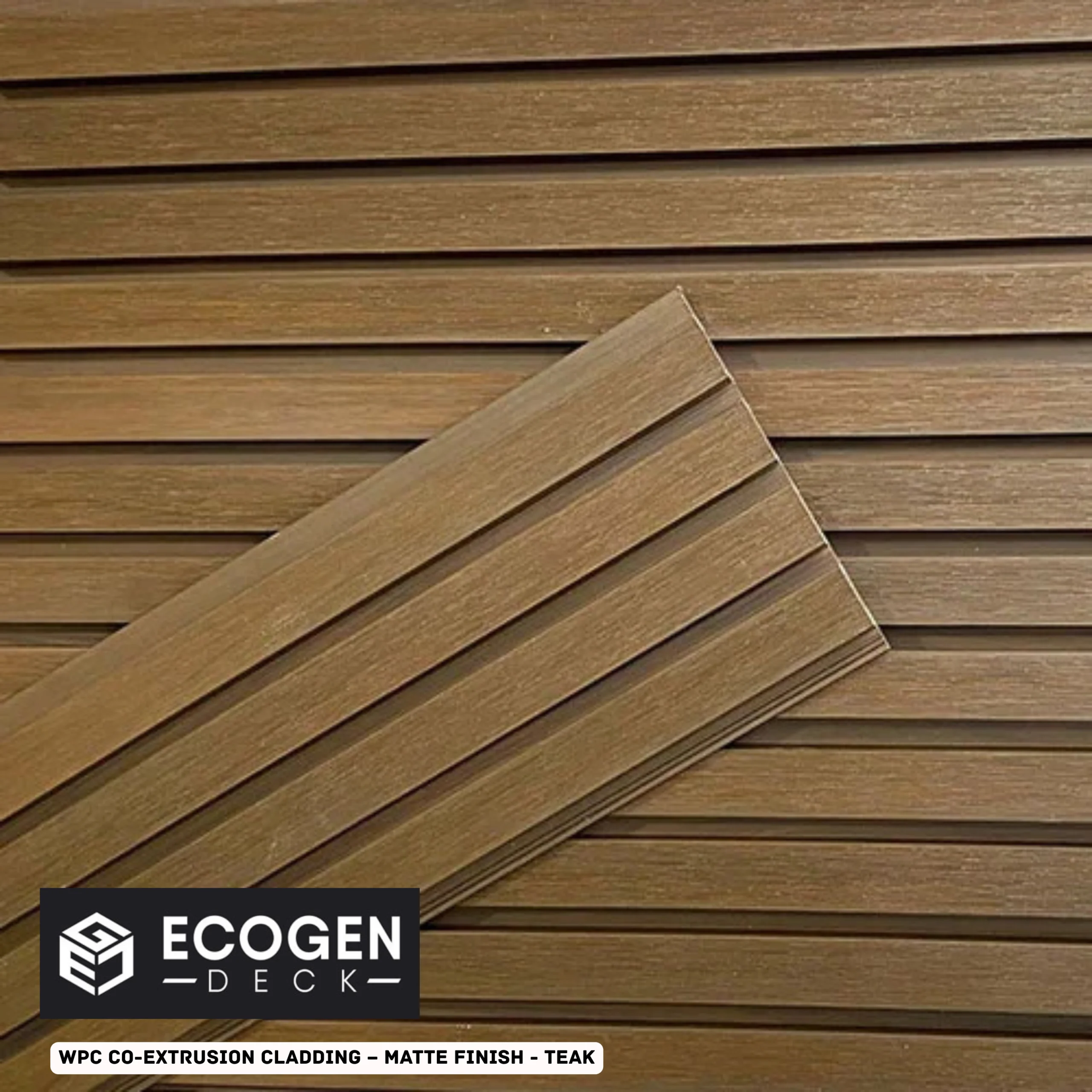
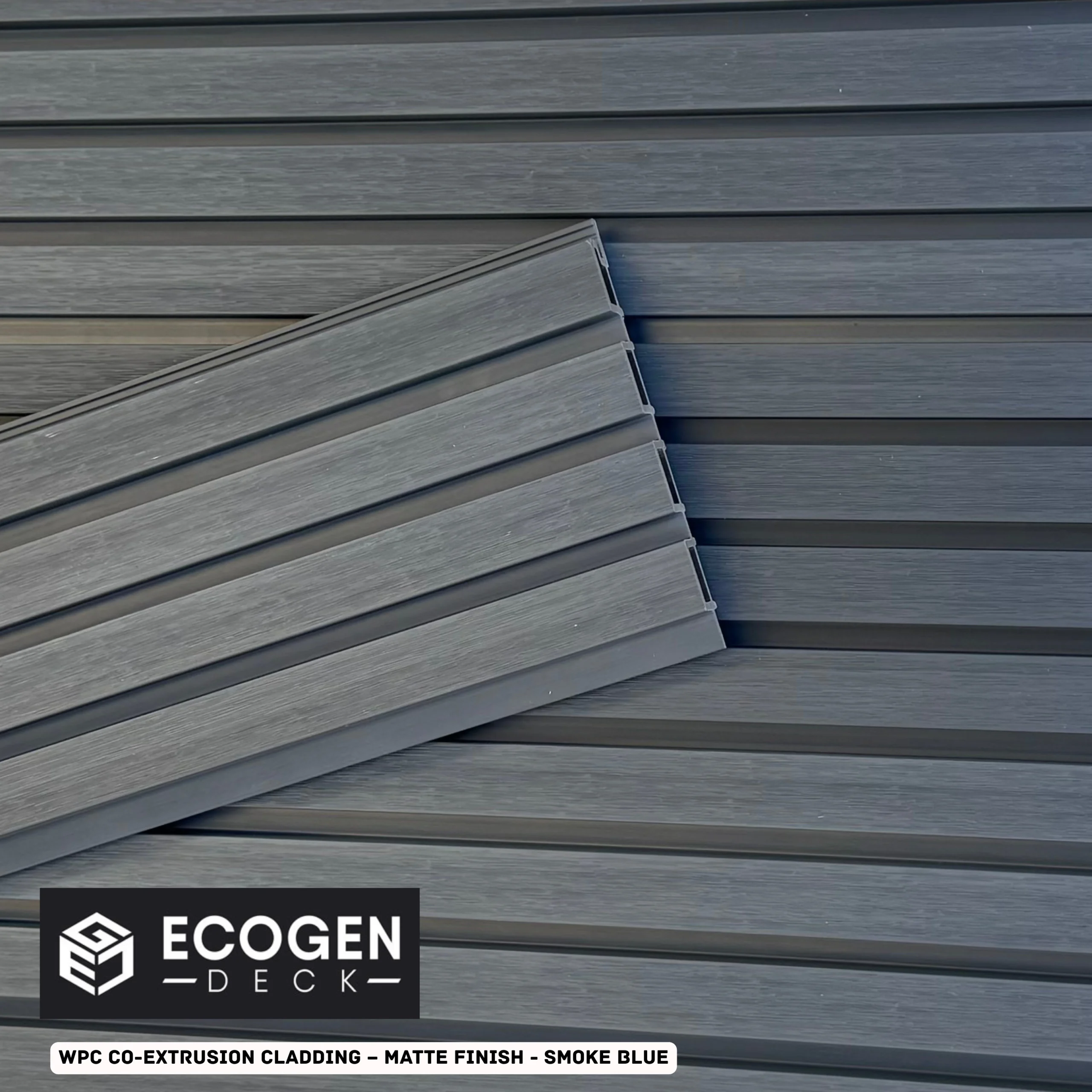
Melbourne homeowners replacing or specifying exterior wall cladding face a genuine decision between WPC co-extrusion panels and timber cladding. Both look like natural wood. Both work on Australian homes. The differences become clear when you look past the product shot and into the 10-year ownership experience. This comparison gives you the honest picture — WPC wins on most criteria, but timber is genuinely the right choice in some situations and we’ll tell you exactly when.
WPC cladding vs timber — head-to-head comparison
Ten criteria that actually affect your decision. WPC refers specifically to ECOGEN Deck co-extrusion panels — not standard composite, which performs differently. Timber refers to exterior hardwood cladding (spotted gum, blackbutt, or similar) and treated pine weatherboard, which are the dominant choices in Melbourne.
| Criteria | WPC Co-Extrusion Cladding | Timber Cladding |
|---|---|---|
| Maintenance | Zero. No painting, oiling or sealing ever required. WPC wins | Paint, oil or seal every 1–2 years in Melbourne’s climate. |
| Lifespan | 20–25 years in exterior applications. WPC wins | 10–15 years with regular maintenance. Less if neglected. |
| UV resistance | UV-stabilised co-extrusion shell. Colour integrity retained across Melbourne summers. WPC wins | Fades, greys and can check without annual UV protection treatment. |
| Termite resistance | Inherent resistance — polymer-bound composite is not a termite food source. WPC wins | Vulnerable without chemical treatment, particularly in Melbourne growth corridors. |
| Moisture resistance | Co-extrusion outer shell prevents moisture penetration. No swelling or warping. WPC wins | Absorbs moisture if unsealed. Warps, swells and can rot in persistently wet cavities. |
| 10-year total cost | Higher supply cost, zero ongoing maintenance. Lower 10-year total. WPC wins | Lower supply cost, $3,000–$6,000 maintenance on a 20m² wall over 10 years. |
| Upfront cost | $104.50–$106.90/m² supply. Higher initial outlay. | $60–$100/m² for hardwood or treated pine weatherboard. Timber wins |
| Natural appearance | Excellent timber-look matte finish. Consistent across boards. | Raw natural grain variation. Genuine organic character. Timber wins |
| DIY repair | Individual boards replaceable. Requires correct colour match from stock. | Timber can be sanded, re-oiled or repainted without full replacement. Timber wins |
| Colour range | 8 colours in matte finish. Tie | Natural timber tones plus full paintable range. |
Where WPC cladding wins for Melbourne homes
The case for WPC co-extrusion cladding in Melbourne is built on three climate-specific facts that don’t apply the same way in cooler, wetter European climates where much of the standard “timber vs composite” research was done.
Melbourne’s UV intensity
Melbourne sits at latitude 37.8°S. The UV index regularly reaches 12–14 on summer days — well above the 6–7 typical in comparable European cities at similar latitude. Timber exterior cladding exposed to this level of UV without annual treatment loses its colour rapidly, develops surface checking (fine cracks along the grain), and begins absorbing moisture once the protective seal breaks down. The co-extrusion shell on ECOGEN Deck panels contains UV stabilisers integrated into the polymer matrix — not applied as a surface coating. It cannot peel, chip or wear through because it is the material, not a treatment of it.
Termite corridors in Melbourne’s growth suburbs
Melbourne’s fastest-growing suburban corridors — Craigieburn, Wollert, Beveridge in the north; Werribee, Tarneit, Hoppers Crossing in the west; Cranbourne, Clyde North in the south-east — all sit in areas with active subterranean termite populations. Timber exterior cladding is a known termite risk in these locations. The cost of remediation after termite damage to external cladding typically exceeds $8,000–$15,000 including replacement and treatment. WPC co-extrusion panels are not a cellulose food source for subterranean termites and do not provide the moisture conditions that attract them in wall cavities.
Maintenance time cost
Most Melbourne homeowners who install timber exterior cladding do not maintain it on schedule. A two-year maintenance cycle requires sanding, two coats of oil or paint, and 1–2 days of labour. On a 20m² wall, that is $600–$1,200 every second year. After six or eight years, most timber cladding on Melbourne homes shows visible degradation — bleaching, surface chalking, paint failure or early rot in joints. The long-term cost differential between WPC and timber is not theoretical — it is measurable and consistent across Melbourne installations.
For Melbourne’s combination of high UV, summer temperature extremes, and active termite zones, co-extrusion WPC cladding is the lower-risk and lower-lifetime-cost choice on almost every project. The upfront price premium is recovered within the first three maintenance cycles avoided.
Where timber cladding still makes sense
This guide would not be honest without acknowledging the cases where timber is genuinely the right choice. Dismissing timber entirely is not accurate — it is still specified widely in Melbourne for reasons that are legitimate.
Lower upfront cost on tight budgets
If a project has a fixed materials budget and WPC supply cost puts it over, treated pine weatherboard at $60–$80/m² is a real option. The 10-year cost is higher, but the immediate cost is lower. For a rental property where the holding period is less than five years, the lower upfront cost of timber may well be the correct financial decision — the maintenance cycle does not fully catch up before the property changes hands.
Genuine raw natural character
The appearance argument for timber is legitimate. Raw spotted gum, blackbutt or ironbark cladding has an organic variation — grain, knots, colour movement across boards — that WPC cannot replicate. The ECOGEN Deck matte finish is an excellent timber-look product. It is not a perfect substitute for someone who specifically wants the character of genuine hardwood on a feature wall where appearance is the primary consideration. If the brief calls for raw natural material, timber delivers that and WPC does not.
Interior feature wall applications
For interior applications — feature walls, TV walls, commercial fit-outs — where UV exposure and moisture are not factors, the maintenance argument for WPC weakens significantly. Timber cladding on an interior wall in a climate-controlled environment can last decades without maintenance. In this context the upfront cost advantage of timber becomes more relevant and the maintenance cost differential disappears.
Budget-constrained projects with short holding periods. Authentic raw hardwood character that WPC cannot match. Interior applications where UV and moisture are not factors. These are real use cases where timber cladding is the correct decision.
See the WPC range in person
All 8 ECOGEN Deck colours are in stock across three Melbourne warehouses. Same-day pickup — bring your project plans and our team will help you select the right colour and calculate your panel count.
Which should you choose for your Melbourne project?
Rather than a generic recommendation, here are the specific scenarios that determine the correct choice.
Choose WPC co-extrusion if:
- Exterior wall on a home you plan to own for 10+ years
- Project is in Craigieburn, Wollert, Werribee, Tarneit or other termite-active zones
- You want zero ongoing maintenance cost after installation
- Alfresco or outdoor entertainment area where UV and moisture exposure is high
- Rental property held for 6+ years where maintenance cost accumulates
- Commercial facade where repainting schedule is disruptive or costly
- Coastal or salt-air adjacent locations (Point Cook, Williamstown, Altona)
Choose timber cladding if:
- Fixed budget where WPC supply cost exceeds the project limit
- Short-term ownership (under 5 years) where maintenance cycle hasn’t hit
- Raw natural grain character is the primary design requirement
- Interior feature wall in a climate-controlled environment
- Heritage or period property where material authenticity is specified
- Owner has the skills and schedule to maintain on a 2-year cycle
What is co-extrusion WPC and why does it outperform standard composite?
Not all WPC cladding performs the same way, and the comparison between WPC and timber is only valid when comparing co-extrusion WPC specifically — not standard composite panels, which perform significantly worse in UV-exposed outdoor applications.
Standard WPC is a single blended material — wood fibres and polymer mixed and pressed into a board. The wood fibre is distributed throughout the full cross-section. In UV exposure, the surface of standard WPC absorbs UV and moisture, leading to surface chalking, colour loss and swelling within three to five years. This is the failure mode that gives composite cladding a poor reputation in some Melbourne installations.
Co-extrusion WPC is manufactured differently. A solid polymer outer shell — typically 1–3mm thick — is fused to the WPC core under heat and pressure in a single manufacturing step. This shell contains UV stabilisers, pigment and a protective coating that is integral to the material rather than applied on top. The ECOGEN Deck co-extrusion panels have a matte finish built into this shell. It cannot peel, chalk, or fade in the way standard composite does because it is not a surface treatment — it is the structural outer layer of the board itself.
The four hollow chambers in the ECOGEN Deck profile reduce weight without reducing strength. Each 2.9m board weighs approximately 8kg — light enough for one person to handle, strong enough to span between subframe battens at 400–600mm centres without deflection.
Ask the supplier: “Is this co-extrusion or standard composite?” Standard composite WPC will eventually fail outdoors in Melbourne’s UV. Co-extrusion WPC will not. The price difference between the two is typically small. The performance difference over five years is significant.
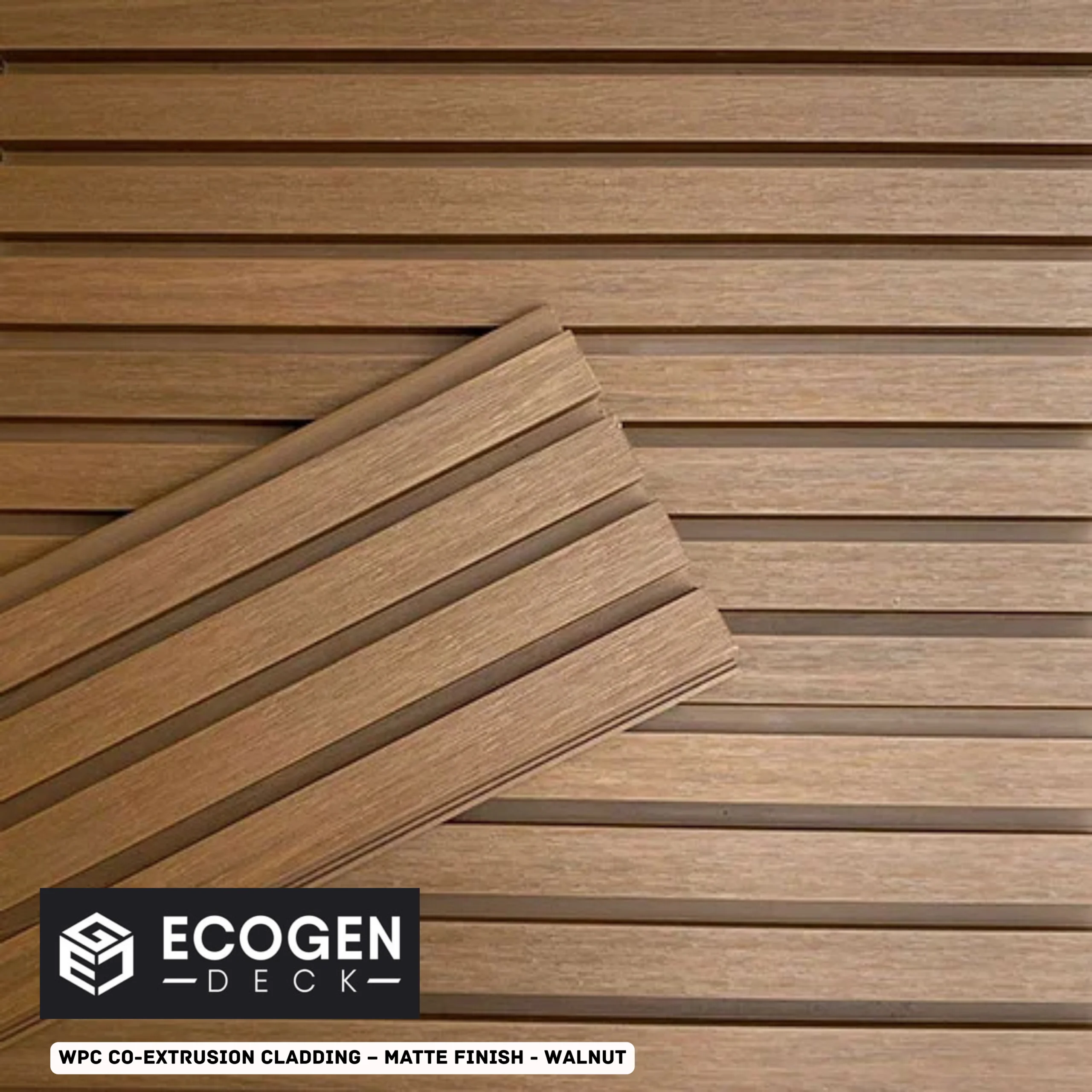
ECOGEN Deck WPC cladding — 8 colours available in Melbourne
All eight ECOGEN Deck co-extrusion colours are in stock across 5Star’s three Melbourne warehouse locations. Four confirmed with image URLs from the published site:
Also available: Red, Smoke White, Pure White and Teak Black. All in 1.9m, 2.2m, 2.9m and 5.8m lengths. All prices include GST.
Read next in the WPC cladding series
Also from 5Star
WPC composite decking to match your cladding, and treated pine H3 for structural subframes.
WPC Co-Extrusion Composite Decking
Co-extrusion WPC decking in matching colours to your wall cladding. Same technology, same matte finish, same zero-maintenance performance. Specify cladding and decking from the same supplier for guaranteed colour consistency.
Shop WPC Decking →Treated Pine H3 — Subframe Battens
H3 treated pine for the subframe behind your WPC cladding. H3 treatment resists moisture and termites in the wall cavity — important in Melbourne’s termite-active growth corridors. Available in standard batten sizes at all three warehouse locations.
Shop Treated Pine H3 →WPC Cladding vs Timber — FAQ
Is WPC cladding better than timber cladding for Melbourne homes?
For most Melbourne homes, co-extrusion WPC cladding outperforms timber across a 10-year period. WPC requires zero maintenance — no painting, oiling or sealing. Timber exterior cladding needs treatment every 1–2 years in Melbourne’s UV and heat. WPC also resists termites by composition and does not warp, crack or fade without treatment. Timber wins on upfront cost and raw natural appearance. The correct choice depends on your project duration, budget, and whether appearance or maintenance cost is the priority.
How long does WPC cladding last compared to timber?
Co-extrusion WPC cladding has a rated lifespan of 20–25 years in exterior applications. Well-maintained timber exterior cladding typically lasts 10–15 years before requiring significant repair or replacement. Unmaintained timber deteriorates faster — particularly in Melbourne’s western and northern suburbs where summer temperatures regularly exceed 40°C and UV index exceeds 12.
What is co-extrusion WPC and how is it different from standard composite?
Standard WPC is a single blended material of wood fibres and polymer. Co-extrusion WPC has a solid protective polymer outer shell fused to the WPC core during manufacturing. This shell provides UV stabilisation, moisture resistance and surface durability that standard composite panels cannot match. The ECOGEN Deck range uses co-extrusion technology — the matte finish is integral to the outer shell, not a surface coating. Always confirm whether a WPC product is co-extrusion before purchasing for exterior Melbourne applications.
Does WPC cladding need painting or maintenance?
No. Co-extrusion WPC cladding panels require no painting, oiling or sealing. The matte finish is part of the outer protective shell manufactured into the panel — it does not peel, fade or require treatment. Maintenance consists of an occasional hose down when dirty. This is the primary advantage over timber cladding for Melbourne’s climate and the main driver of WPC’s lower 10-year total cost.
Is WPC cladding termite resistant?
Yes. WPC co-extrusion panels are not cellulose-based in the way that termites attack natural timber. The polymer-bound wood fibre composite does not provide the food source or moisture conditions that attract subterranean termites. This is particularly relevant in Melbourne’s growth corridors — Craigieburn, Wollert, Werribee, Tarneit and Cranbourne — where termite activity in soil is well documented and timber cladding replacement costs are high.
Ready to choose your WPC cladding?
Browse all 8 ECOGEN Deck colours in stock at three Melbourne warehouses. Same-day pickup. No trade account needed. Warehouse-direct pricing for all customers.